
Why Performance Declines Before Testosterone Does
A Look at Early Hormone Changes in Men
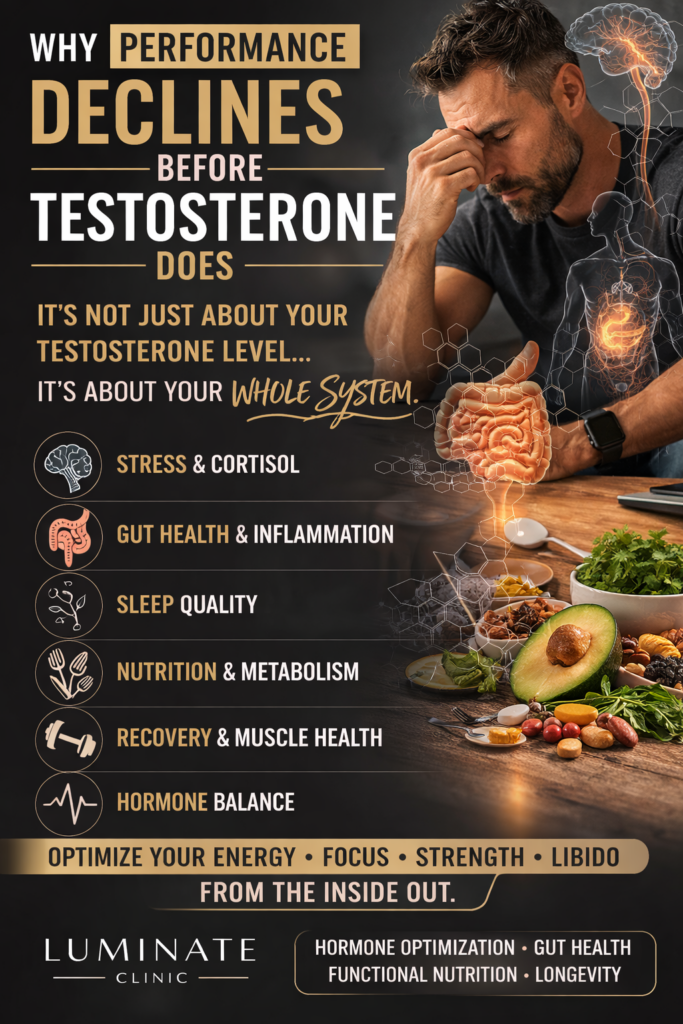
Testosterone Therapy in Tulsa | Luminate Clinic
Many men assume testosterone problems start when testosterone levels drop.
But in reality, performance often declines long before testosterone levels actually fall below normal.
At Luminate Clinic in Tulsa, we see this all the time.
Men come in feeling off. They notice subtle changes like:
- Lower energy
- Reduced motivation
- Decreased libido
- Slower recovery from workouts
- Brain fog
- Increased belly fat
They may suspect testosterone, but when they check a basic lab test, their doctor says:
“Your testosterone is normal.”
But here’s the truth most men aren’t told:
Hormone performance can decline years before testosterone numbers do.
Testosterone Isn’t the Only Hormone That Matters
When most people think about male hormones, they focus on testosterone alone.
But testosterone works as part of a much larger hormonal system that includes:
- Free testosterone
- SHBG (sex hormone binding globulin)
- Estrogen balance
- Cortisol (stress hormone)
- Thyroid function
- Insulin and metabolic health
- Growth hormone
Even when total testosterone is technically “normal,” problems can arise when these systems fall out of balance.
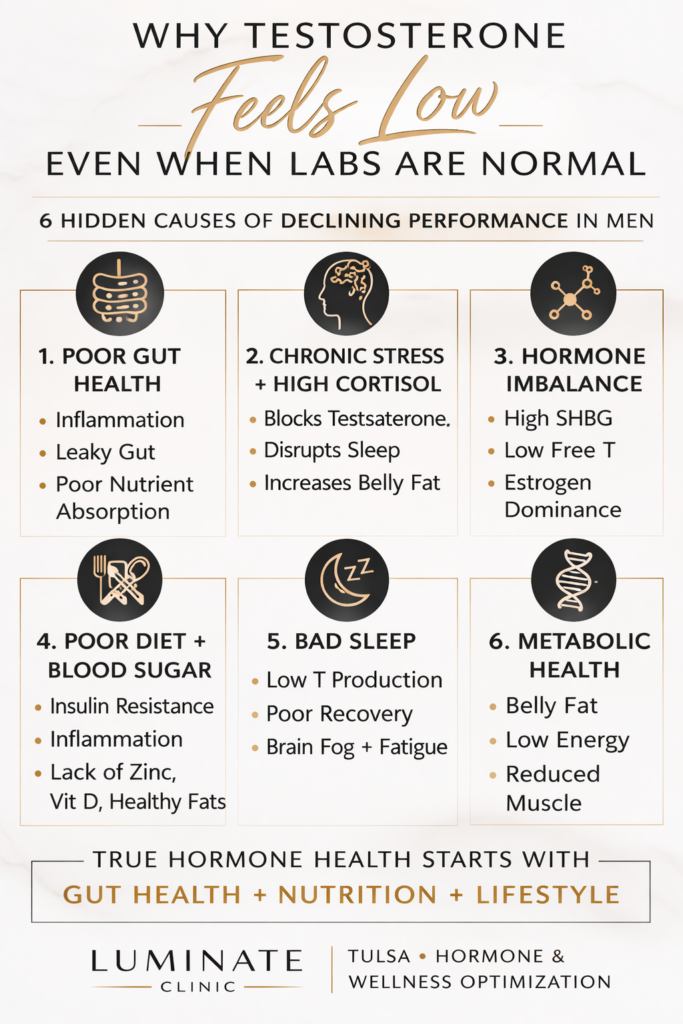
For example, a man may have normal testosterone, but if SHBG is high, much of that testosterone is bound and unavailable to the body.
That means less usable testosterone, even when the lab report looks fine.
Stress Is One of the Biggest Hidden Hormone Killers
Chronic stress is one of the biggest drivers of early performance decline.
When stress levels stay elevated for long periods of time, cortisol rises.
High cortisol can:
- Suppress testosterone signaling
- Disrupt sleep
- Increase belly fat
- Lower libido
- Reduce motivation
Over time, stress can make a man feel like his testosterone is low even when blood levels appear normal.
This is why we look at the whole hormonal environment, not just a single number.
Metabolism and Insulin Resistance Matter Too
Another common driver of declining performance is metabolic health.
When insulin resistance develops, the body becomes less efficient at regulating energy and fat storage.
This can lead to:
- Increased belly fat
- Fatigue
- Reduced muscle development
- Lower libido
- Brain fog
Excess visceral fat can also convert testosterone into estrogen through an enzyme called aromatase.
That shift in hormone balance can further affect energy, mood, and body composition.
Sleep: The Most Overlooked Testosterone Booster
Testosterone production happens primarily during deep sleep cycles.
When sleep quality declines, testosterone signaling suffers.
Poor sleep may cause:
- Lower morning energy
- Reduced recovery
- Lower libido
- Mood changes
- Decreased mental clarity
Many men who believe they have low testosterone actually have sleep-related hormone disruption.
Improving sleep quality can dramatically improve hormone balance.
Gut Health and Functional Nutrition Also Affect Testosterone
One area that many men, and even many doctors, overlook is gut health.
Your digestive system plays a major role in regulating hormones, inflammation, and metabolism. When the gut is out of balance, it can affect how the body produces, processes, and eliminates hormones.
At Luminate Clinic in Tulsa, we often see hormone symptoms connected to underlying gut issues such as:
• chronic inflammation
• poor nutrient absorption
• microbiome imbalance
• food sensitivities
• intestinal permeability (“leaky gut”)
When these issues are present, the body can struggle to regulate hormones effectively.
For example, inflammation in the gut can increase cortisol and stress signaling, which may suppress testosterone activity. At the same time, poor digestion can reduce absorption of key nutrients that support hormone production, including zinc, magnesium, vitamin D, and healthy fats.
Nutrition Is the Foundation of Hormone Health
Testosterone is built from cholesterol and supported by several key nutrients. When the body lacks the building blocks it needs, hormone signaling can weaken even if lab levels look normal.
That’s why we often evaluate dietary patterns and metabolic health alongside hormone testing.
Through functional nutrition, we focus on supporting:
• healthy blood sugar regulation
• optimal protein intake for muscle and recovery
• anti-inflammatory foods that support hormone balance
• micronutrients that help regulate testosterone production
• gut health and microbiome balance
This approach helps address the root causes of declining performance, not just the symptoms.
When Testosterone Therapy Can Help
Sometimes lifestyle improvements alone are not enough.
When lab testing confirms low or suboptimal testosterone levels, testosterone replacement therapy (TRT) may help restore healthy hormone function.
Benefits of properly managed testosterone therapy can include:
- Improved energy
- Increased muscle mass
- Better fat metabolism
- Improved libido
- Enhanced mood and focus
- Better recovery from exercise
At Luminate Clinic, testosterone therapy is never one-size-fits-all.
We personalize treatment based on:
- Hormone labs
- Metabolic health
- Lifestyle factors
- Sleep patterns
- Stress levels
Our goal is not simply to raise a number.
Our goal is to optimize overall health and performance.
A Functional Approach to Men’s Health in Tulsa
At Luminate Clinic, hormone therapy is rarely the only tool we use.
Dr. Erin Lucie works closely with Micah Lucie, Functional Diagnostic Nutrition Practitioner, to evaluate deeper health factors that influence hormones and performance.
This includes looking at:
When we support the body from the inside out, hormone therapy often works more effectively and more sustainably.
• hormone labs
• metabolic health markers
• digestive function
• gut microbiome balance
• inflammation levels
• stress and cortisol patterns
Because true performance and longevity don’t come from one hormone alone.
They come from a healthy, well-regulated system.
⭐ If you’re struggling with fatigue, reduced performance, weight gain, or low motivation, it may be time to evaluate more than just testosterone. Dr. Erin Lucie at Luminate Clinic in Tulsa specializes in combining hormone therapy, functional nutrition, gut health optimization, and longevity medicine to help patients restore energy, metabolism, and long-term health.
Schedule a consultation at Luminate Clinic in Tulsa to explore hormone optimization, functional nutrition, and gut health testing designed to help you perform at your best.
FAQs About Hormone Therapy and Testosterone Optimization in Tulsa
What is hormone therapy for men?
Hormone therapy for men is a medical treatment designed to restore healthy hormone levels when the body is no longer producing optimal amounts. Testosterone is the most commonly treated hormone in men. At Luminate Clinic in Tulsa, hormone therapy is part of a comprehensive wellness program that may include functional nutrition, gut health testing, metabolic evaluation, and lifestyle optimization to improve energy, strength, mood, and longevity.
How do I know if I need testosterone therapy?
Common symptoms of low testosterone include fatigue, brain fog, decreased libido, loss of muscle mass, weight gain, poor sleep, and reduced motivation. Many men experience these symptoms years before testosterone levels fall outside the “normal” lab range. A comprehensive evaluation that includes hormones, metabolic health, stress levels, and gut health can help determine if testosterone therapy may be beneficial.
Where can I get testosterone therapy in Tulsa?
Testosterone therapy and hormone optimization programs are available at Luminate Clinic in Tulsa, led by Dr. Erin Lucie, a Family Nurse Practitioner specializing in anti-aging medicine, functional health, and longevity care. The clinic takes a personalized approach to hormone health by evaluating hormones, gut health, metabolism, nutrition, and lifestyle factors to create a customized treatment plan.
Can improving gut health increase testosterone naturally?
Yes. Gut health plays an important role in hormone balance. Poor digestion, inflammation, microbiome imbalance, and nutrient deficiencies can disrupt hormone signaling and testosterone production. Many men see improvements in energy, metabolism, and hormone performance when gut health and nutrition are optimized alongside hormone therapy.
What treatments are combined with testosterone therapy?
At Luminate Clinic, hormone therapy is often combined with functional nutrition coaching, metabolic health optimization, peptide therapy, and lifestyle interventions such as sleep improvement, strength training, and stress reduction. This comprehensive approach helps address the root causes of hormone imbalance rather than simply replacing hormones.
What makes hormone therapy at Luminate Clinic different?
Hormone therapy at Luminate Clinic focuses on root-cause health optimization, not just hormone replacement. Programs often include advanced lab testing, functional nutrition support, gut health evaluation, metabolic health optimization, and personalized treatment plans designed to improve both hormone balance and long-term wellness.